School of Fisheries
School of Fisheries
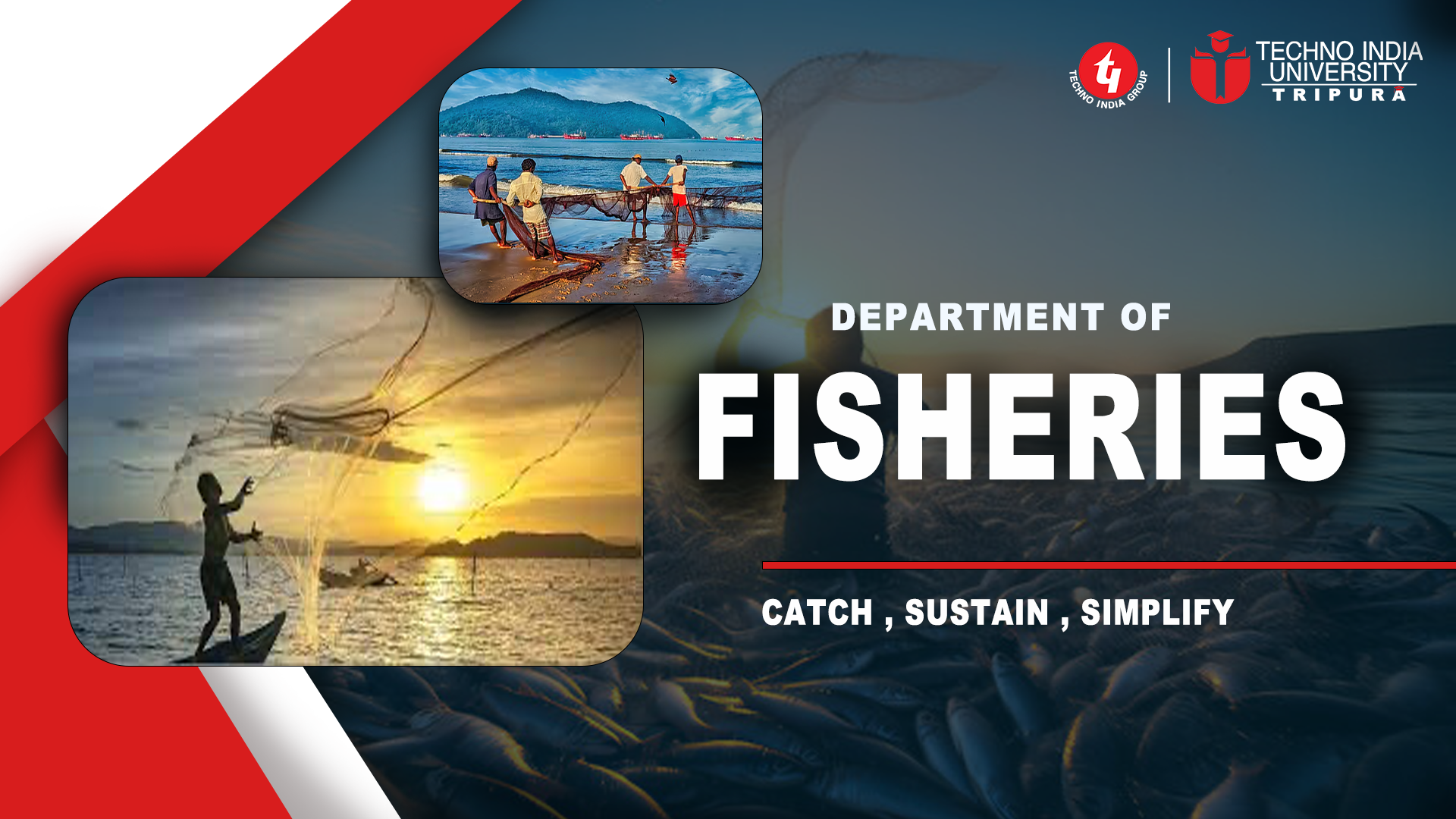
The School of Fisheries stands as a part of Techno India University Tripura (TIUT), which heralds the esteemed legacy of the Techno India Group spanning over four decades. Established in Tripura, this school marks a pioneering endeavour as the first private institution to introduce the Bachelor of Fisheries Science program in the region. Newly established as a separate entity from the School of Agricultural Sciences starting in 2024, the School of Fisheries focuses on the science and management of aquatic resources. The school is dedicated to providing comprehensive education and training in fisheries and aquaculture, preparing students for careers in fishery biology, resource management, fish processing technology, and more.
Through its diverse departments, the school aims to promote sustainable practices and innovations in the fisheries sector, contributing to the economic and ecological sustainability of aquatic resources. The school comprises seven departments and offers one undergraduate program.
Vision
Empowering the future of fisheries through sustainable practices, innovative research, and multidisciplinary education to foster a thriving aquatic ecosystem and skilled workforce.
Mission:
1. Promote sustainable fisheries management and conservation.
2. Enhance employability through industry-relevant training.
3. Emphasize practical, hands-on fisheries education.
4. Foster a multidisciplinary approach in fisheries academics.
5. Collaborate with stakeholders to drive innovation in fisheries education and research.
Career Opportunities
Program Details
| Sl. No. | Courses | Years | Semester | Eligibility Criteria | Marks Required |
|---|---|---|---|---|---|
| 1 | B.Sc. Fisheries (BFSc) | 4 | 8 | Passed/ Appeared in 10+2 (Stream : Science) | 55% |
Fee Structure
| Sl. No. | Courses | Admission Fee | Semester Fee | Program Fees Total |
|---|---|---|---|---|
| 1 | B.Sc. Fisheries (BFSc) | 15000 INR | 33000 INR | 279000 INR |
Syllabus
| Sl. No. | Department | Course |
|---|---|---|
| 1 | Fisheries |
Department
FACULTY